

They are tiny, fragile, light as a breath. Sometimes we see them, for a split second, disappearing into the heart of a flower before resuming their aerial dance.
Yet behind this discretion lies an immense reality: bees carry on their wings an essential part of life.
They do more than just herald the arrival of spring.
They shape our landscapes, nourish ecosystems, and support our food supply. Without them, colors fade, flowers disappear, and the world loses some of its vitality.
Honeybees and wild bees: a kingdom larger than we imagine
In the minds of many, bees live in hives, make honey, and fly in organized swarms.
But this image, although true, is only one facet of a rich and varied world.
The vast majority of bees are wild, solitary, and discreet. They nest in the ground, in the hollow of a wall, in a reed stalk. They do not produce honey—but they produce life.
Honeybees, which are better known, provide general pollination.
Wild bees, on the other hand, are often specialized: some visit only one type of flower.
Together, they weave a silent pollination network that maintains the balance of biodiversity.
The beehive: a miniature society that inspires respect and fascination
The hive is an organized, precise, almost orchestral world, where every role is necessary.
The queen, at the center of everything, can lay up to 2,000 eggs per day.
The workers, the true heroes of everyday life, evolve throughout their lives:
cleaners, nurses, wax makers, builders, guards, then foragers traveling miles to bring back nectar and pollen.
The drones ensure the genetic continuity of the colony.
This natural hierarchy, free of conflict and remarkably efficient, reveals a model of total cooperation.
It was this collective intelligence that inspired Mangrose to create its Multicolored Bee, a symbol of solidarity and natural harmony.
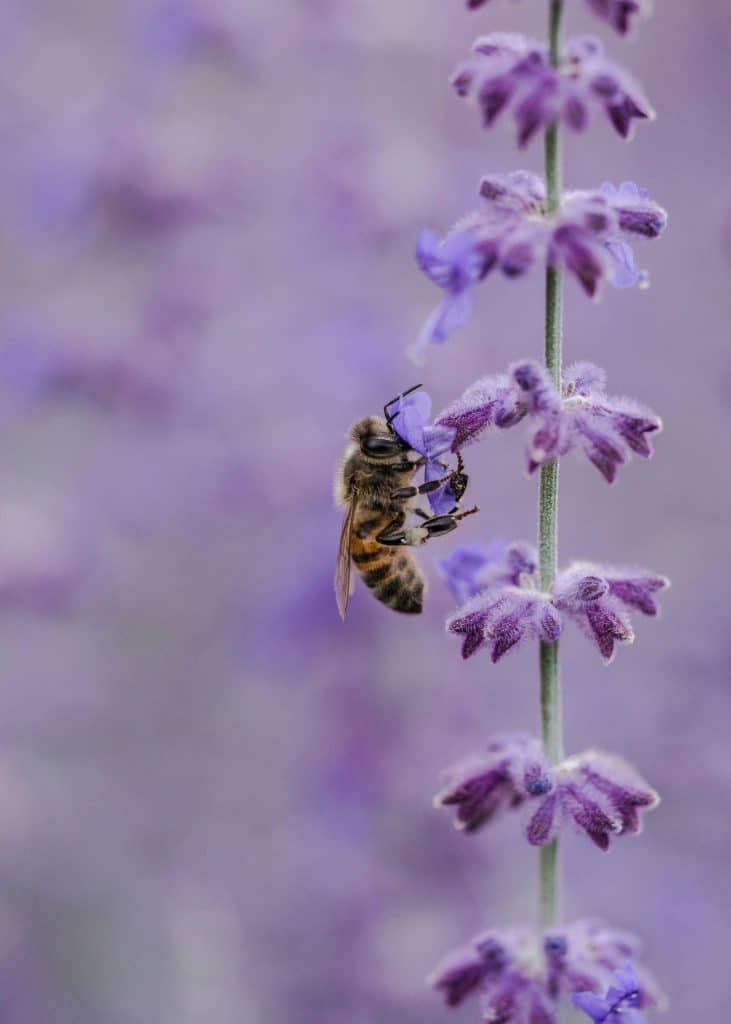
Why bees are essential: the miracle of pollination
The action seems simple: a bee lands, collects pollen, and flies away.
But this movement, repeated thousands of times, has a colossal impact: the reproduction of hundreds of thousands of plants.
Domestic and wild bees are responsible for over 70% of the pollination of food crops worldwide.
They don’t just feed humans: they sustain entire food chains.
Without them, wildflowers would wither, insects would lack resources, and birds would gradually disappear.
An entire ecosystem rests on their delicate wings.
A fragile balance
And that balance is cracking.
In a decade, bee populations have fallen by more than 30% in Europe.
Some wild species are disappearing silently.
Threats are mounting:
- Pesticides, particularly neonicotinoids, disrupt their orientation and weaken their immunity.
- The disappearance of flowers deprives bees of varied and nutritious food.
- Viruses and varroa mites, a formidable parasite, weaken colonies.
- The Asian hornet is decimating pollinators.
- Climate change disrupts flowering cycles and puts colonies under severe strain.
Bees have never been so essential… or so vulnerable.
How can we protect these invisible heroines?
The good news is that everyone can take action.
Plant lavender, clover, or borage.
Leave a corner of the garden untilled.
Install shelters for solitary bees.
Avoid all pesticides, even “natural” ones.
Choose local, responsibly produced honey.
Support committed associations.
Every action strengthens the chain of life.
Pollinis: a powerful voice defending bees
The Pollinis association is fighting hard to protect bees and all pollinators.
It lobbies European authorities to ban dangerous pesticides, funds scientific research, and raises awareness among thousands of citizens.
Their message is simple:
if bees disappear, part of the living world will collapse with them.
Mangrove is committed: €5 donated for every Bee model sold
At Mangrose, the bee is a symbol of life, joy, and hope.
The Multicolored Bee embodies the beauty of nature and the importance of preserving it.
C’est pourquoi Mangrose s’est engagé auprès de Pollinis :
5 € sont reversés pour chaque t-shirt ou sweat de la collection Abeille vendu.
Clothing that protects.
A design that carries a message.
A purchase that becomes concrete action for the planet.
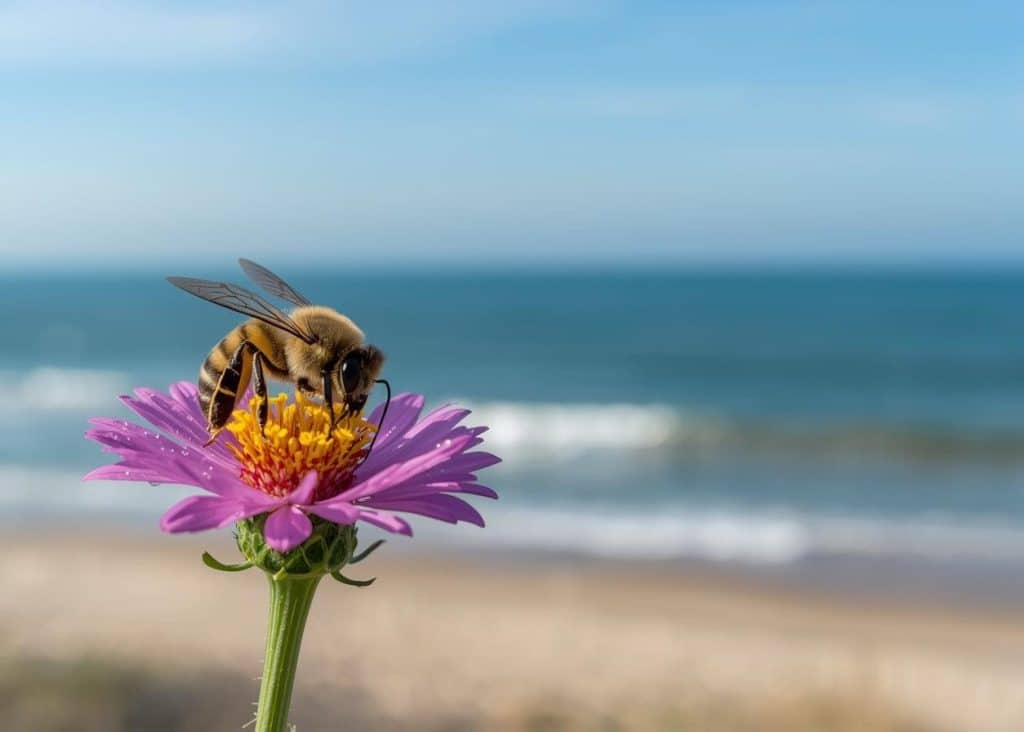
Photos: Aaron Burden / Unsplash & photo personnelle
